
The Apple Motif
Hallowe'en PartyThe apple shifts from a familiar emblem of party games and Ariadne Oliver’s appetite into an unsettling link between childhood, murder, and the investigation’s return to the past.
increasing Bearing strength in each event
 decreasing
Bearing strength in each eventdecreasingParty Apples

A Familiar Fruit
Comic Entrance
At the preparations for the Woodleigh Common Hallowe’en party, apples first enter the story as practical party supplies. Ariadne Oliver likes them, eats one almost absent-mindedly, and becomes the target of teasing from Joyce Reynolds and the other children.
A Seed of Unease
The fruit’s ordinary role is surrounded by jokes about mess, buckets, and games. That comic setting later makes the apples in the bobbing tub inseparable from the murder discovered there, turning an everyday pleasure into an image of danger.
The motif begins in appetite and amusement, but the novel quietly makes the party’s harmless objects capable of carrying a darker meaning.
The Galvanized Tub
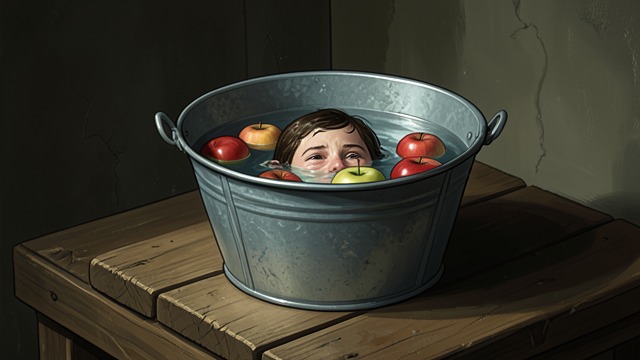
Apples in Water
A Party Game
The organizers debate which container should hold the water for apple bobbing. A plastic pail is considered, but a galvanized bucket wins because it is heavier and less likely to tip over.
A Choice Recast
After Joyce Reynolds is found drowned, the practical choice becomes horrifying in retrospect. Ariadne Oliver imagines that a lighter container might have shifted or fallen, while Hercule Poirot recognizes that the weight of the bucket belongs to the method of killing, not to chance.
The bucket and apples preserve the party’s innocent surface while exposing how readily ordinary arrangements can be turned into instruments of violence.
The Fruit Becomes Unwelcome
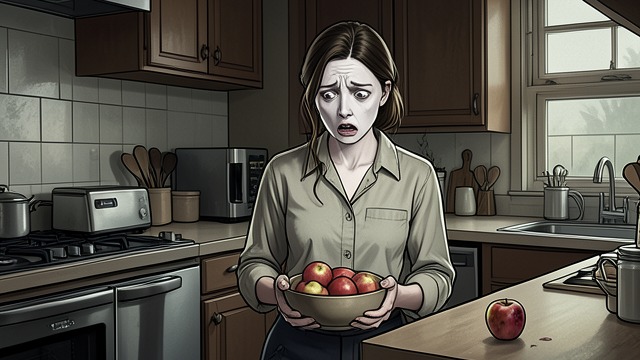
Appetite Interrupted
Revulsion
When Ariadne Oliver describes Joyce’s death to Hercule Poirot, she remembers the girl’s head forced beneath water among the floating apples. Her familiar fondness for the fruit collapses into disgust, and she says she never wants to see an apple again.
Personal Cost
The change gives the crime an intimate afterlife. The murder has altered not only the people closest to Joyce but also Oliver’s ordinary habits, making the party’s playful fruit a persistent reminder of a child’s death.
The motif measures grief through a small, physical aversion: the world’s familiar pleasures can be contaminated by what happened beside them.
The Stained Reputation

The Apple and the Lie
A Village Judgment
As Hercule Poirot questions residents, Joyce Reynolds is repeatedly described as a boastful liar. Her claim to have witnessed a murder is therefore dismissed, just as people readily accept that the girl’s words were merely attention-seeking.
A Changed Meaning
The apple motif echoes that judgment: a fruit can look sound while hiding something unpleasant near its core. Dr Ferguson uses a similar comparison for human beings, while Miss Emlyn later describes trustworthy adolescents as sound apples without maggots.
These comparisons make credibility feel like an act of inspection. Appearances and reputations can mislead, and the investigators must distinguish a habitual liar’s borrowed story from the real witness who first told it.
The Motif’s Return
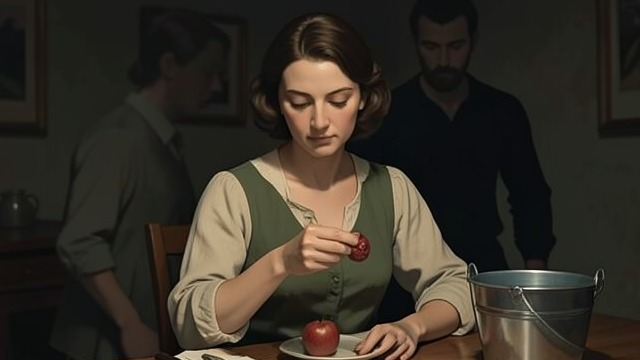
Beyond the Party Fruit
A Repeated Pattern
Even as Hercule Poirot pursues older crimes, Ariadne Oliver’s association with apples repeatedly returns in their conversations. After Joyce’s death she turns to dates instead, and Poirot treats that incidental change as a prompt to think again about time and the past.
Ordinary Things as Guides
The fruit itself does not solve the murders. Its narrative importance lies in how a mundane detail carries memory between scenes: party games recall the drowning, and Oliver’s changed appetite marks the event’s effect on her.
By the ending, the apple is neither a magical clue nor a decorative symbol. It is the story’s compact reminder that ordinary life and concealed violence can occupy the same object.
During preparations for the Halloween party
During the party, before the body is discovered
The evening after Joyce Reynolds is discovered
During Poirot’s early inquiries in Woodleigh Common
After the crimes are solved
